


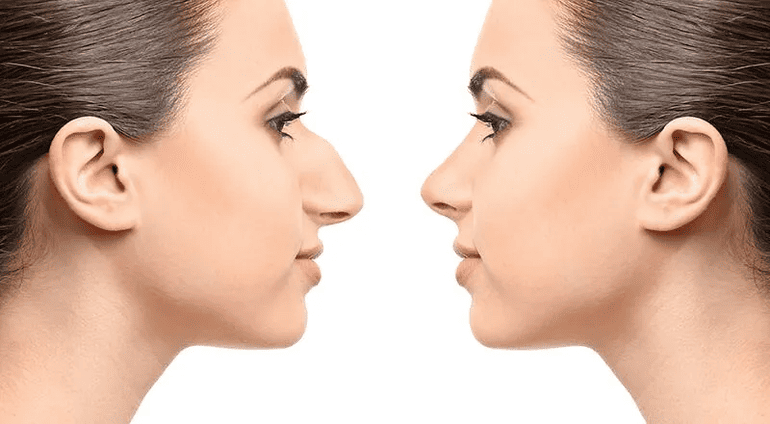
Rhinoplasty is a surgical procedure that aims to improve the nose both functionally and aesthetically. In short, it reshapes the nasal bridge, tip, width, and angles to create a harmonious result that suits the face.
The goal is not only a “beautiful nose,” but a natural look that blends with your facial features and, when needed, improves breathing function.
Rhinoplasty can be performed using different techniques depending on individual needs. The most common approaches are open and closed rhinoplasty. Open rhinoplasty involves a small incision on the columella, allowing the surgeon to see the nasal structures clearly and perform detailed shaping. Closed rhinoplasty uses incisions entirely inside the nose, leaves no visible scar, and may offer a more comfortable recovery. In recent years, piezo (ultrasonic) rhinoplasty has become popular as it shapes the nasal bones in a more controlled manner and aims to reduce swelling and bruising. The best method for you is determined based on your nasal anatomy, expectations, and the preoperative evaluation.
Rhinoplasty can be an ideal solution for people who are unhappy with the appearance of their nose or experience breathing problems. Especially:
The nasal structure, facial proportions, and breathing function are evaluated. A natural or more defined nose shape is planned based on your expectations. 3D simulation and photo analysis may be used.
The operation is performed under general anesthesia. Open or closed technique is chosen. The nasal hump may be reduced, the tip is refined, and when needed, septoplasty is performed to improve airflow.
A splint is typically used during the first week. Bruising usually decreases within 5–7 days. The final nose shape settles over 6–12 months. The result is a natural-looking nose that may also make breathing easier.
Pain after rhinoplasty is usually minimal and can be controlled with simple pain relievers. Swelling and congestion are temporary.
Bruising and swelling may be noticeable during the first week, but most of it improves significantly within 5–7 days. Many patients can comfortably return to social life by the second week.
Early results are visible within about 1 month, but the nose can take 6–12 months to fully settle. Swelling gradually resolves over time.
Yes. When aesthetic rhinoplasty is combined with septoplasty, nasal deviation can be corrected and breathing function may improve significantly.
Rhinoplasty pricing depends on the surgical technique, the surgeon’s experience, and hospital conditions. The most accurate price can be provided after an in-person evaluation and personalized planning.

